A Letter To New Moms

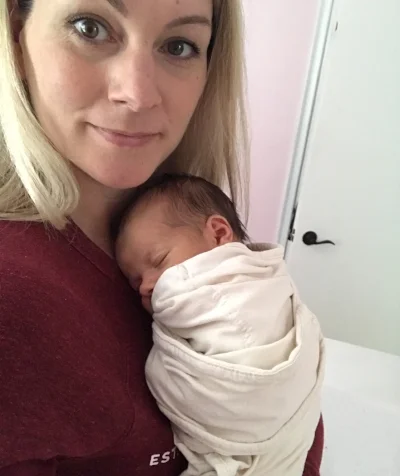
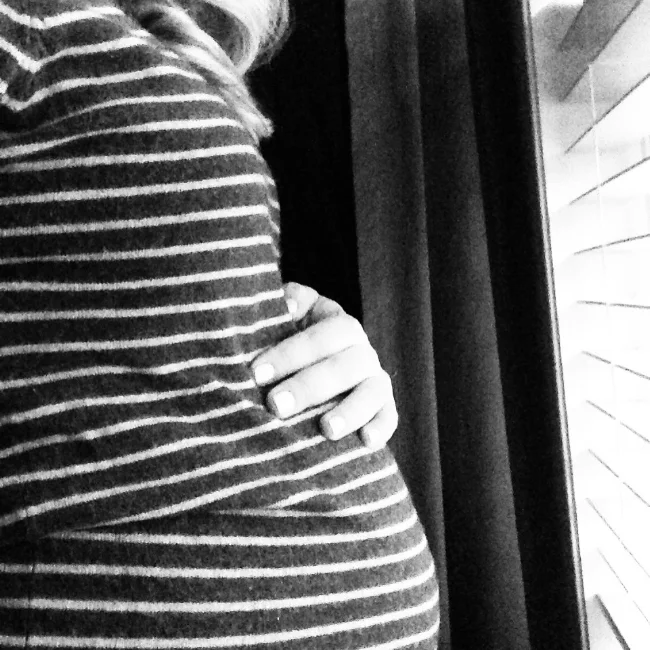
From this week until the end of December, we are expecting 7 new babies in our family and friends circle, and it got me reminiscing on those first days of motherhood. My daughter was born on the 7th, on a Saturday, so at this time exactly 9 months ago I was about to become a mom in less than 24 hours. And my world would be rocked!

Just shy of my daughter being 2 weeks old, my cousin came to visit for some baby snuggles. With a gift was a letter she had written, passing on some sage mom wisdom being a mom of two herself.

I BAWLED the first time I read the letter - I mean, I was 2 weeks postpartum and perhaps slightly (okay totally) overwhelmed and hormonal. But still. I think I only made it half way down the page the first time I read it because I literally couldn't see through the waterworks of tears.

For any women about to become a mom, or perhaps has recently become a mom, I would like to pass on my cousin's loving words (with her permission), in the hopes that perhaps it will give you a bit of reassurance and comfort during this absolute whirlwind time. Let's be honest, I just re-read it and cried again, it's great advice no matter where you are on your motherhood journey.

Let me start by saying how very happy I am for you and your new family! This is an exciting time that will without a doubt trump all other moments in your life thus far. As a fellow mom, I feel it is my duty to warn you about all the “super helpful” thoughts, ideas, and suggestions you will receive in the next while, and remind you that on those days you think you are going crazy…nope, you really are just normal. So, without further ado, here are my thoughts for you:
A little advice on taking advice:
Take all the “offered” advice with a grain of salt. Always remember, “mother knows best”…meaning you!
When someone offers help, take it! This does not make you weak, this makes you smart.
You will have those days that being short on sleep and overtired get the best of you, and you may look at that baby and say, “holy shit, what did I do!” Don’t feel bad, this makes you normal, and anyone that tells you they never had one of these moments is lying to you. Rest assured, when that sweet baby curls up in your arms and falls asleep to the rhythm of your heart, you will fall in love all over again.
Your baby does not come with a program, as each and every child and situation is unique, so take what you want from all those baby self-help books, and brainwashing Google sites, and toss the rest away.
Take guilt-free time for YOU! These are necessary sanity breaks, and YOU DESERVE THEM!
Join a baby group, but don’t get caught up in the comparison game. Some women will tell you that their child is perfect no matter what…seek out the ones that make you feel normal, not inadequate.
Lastly, don’t forget each other. After all, this baby wouldn’t be here if it weren’t for the love that brought the two of you together. Some day that little baby will grow up and get a life of it’s own, and you don’t want to lose sight of each other and your marriage in the meantime. You will find date night takes on a whole new meaning once you have a baby – it means you get to eat a meal while it’s actually hot, wear something other than yoga pants and a hoodie with barf, poop, or snot on it, and perhaps even risk the idea of putting on a regular bra again, even just for an hour or two.
I can’t wait to watch your little baby grow and become the beautiful little person she is destined to be.
With Love
IMG_0916.JPG

If it doesn't feel right, it's probably not right.

If it doesn’t feel right, it’s probably not right...or at least, not at this point in time.

Have you ever initially been really excited about something, only to find that a short time later some invisible force is holding you back, delaying you from giving your attention to it, making you question, "what happened?".

I was really excited to launch my new Raw Mindset + Nutrition Course last week.  I had structured it in a different way than previous nutrition courses I've offered, it was longer in duration, included new topics, and had a book to accompany the course. I even had tank tops picked out, ready to order as women signed up. I was SO excited to launch. Mostly though, I was looking forward to connecting with a new group of women, and watch them have personal breakthroughs and achieve personal growth.

But something didn’t feel right. What didn’t feel right finally came to me, days before I was scheduled to start registration. Offering the course right now feels very disingenuous. It’s not because I don’t believe in what the course holds – I do, very much so. But it’s because I, myself, am not following what I lay out in the course, at this point in my life right now.

I’m not going to pretend that I have it all together. I don’t. Motherhood hit me like an ocean storm. There have been calm periods, but there have also been some rough days where I barely feel like I have my head above the water. I don’t believe that makes me unfit to be a coach, I believe that makes me human. In fact, I believe it will make me an even better coach when the timing is right and I launch the course.

During this time of inquiry, I've find myself asking (alot), "What does make me feel better?" One of the answers every single time is working out. Moving my body. Which, if you saw my Instagram story yesterday, you'll know that I hit a less than ideal number of workouts last month, at least for me when it comes to what I need to achieve positive mental health.

It’s got me wondering - how many other women out there struggle to workout because it feels like there isn’t time? Like they may as well not do the workout if they only have time for half of it? And how many women want the community feeling that comes with group fitness, but doesn’t have a schedule or budget that works with those classes? (Or a baby who screams at all childcare options at various gyms, lol, just me?!)

So while Raw Mindset + Nutrition is on hold, I have switched gears towards developing a training program that I hope will solve those issues above that I myself have been hitting over and over for many months now.

I guess just chalk this up to life lesson #482: Despite the hit the ego may take, sometimes completely changing direction is necessary. It doesn't make you a fraud, and it certainly doesn't make you any less great.

What is ONE thing you struggle with when it comes to working out? Drop me a line below or DM me, I'd love to hear your thoughts:)

IMG_5183.jpg

Let's Talk Peeing During Exercise

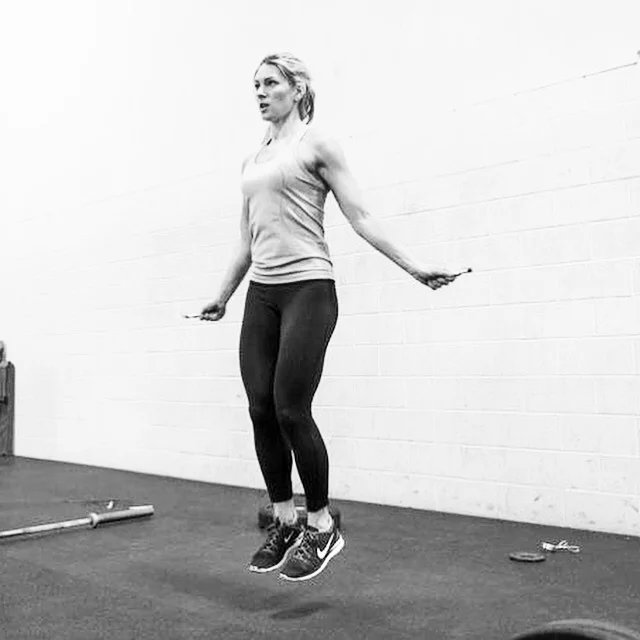
If the thought of skipping makes you worry about peeing your pants, you're not alone. Perhaps you avoid skipping - whether double-unders or singles, box jumps, going on the trampoline with your kids, or doing any sort of plyometric work, all out of fear of leaking. Maybe it's as simple as a cough or sneeze that causes an unwanted trickle. Or maybe it takes nothing at all.

"Okay, yup, been there. I only wear black pants on days with jumping. Where are you going with this?"

Good news - it doesn't need to stay like this for you forever. While very common, it's not normal for the human body to function this way. Common does not equal normal.

I first encountered stress urinary incontinence in University as a varsity athlete on the track & field team. For me, the "stress" part that caused it was the plyometric component of our training, and often during the bounding exercises I would get a little of that unwanted trickle. I assumed it was normal, and was too embarrassed to ask my coach.

Fast forward years later when I discovered Crossfit, and amoung fellow female class members we'd ask each other, "what's your number?" and know exactly what the other was talking about -  how many double-unders can you hit before you pee a little? The fact it's so common really does make you start to think it's normal, and that it just comes with the territory of being a female athlete.

Keep in mind - both the track bounding and the Crossfit double-under issues happened years before I ever got pregnant. I didn't really think it was normal before having kids, and I had always heard "it's a mom thing", so I have to admit I was a little worried about what would happen to me once I actually did have kids, if I was already experiencing it pre-babies. This is what led me to Heather at Lakeview Physiotherapy while pregnant. I wanted to learn more about pelvic health, and what I could specifically do for my own health.

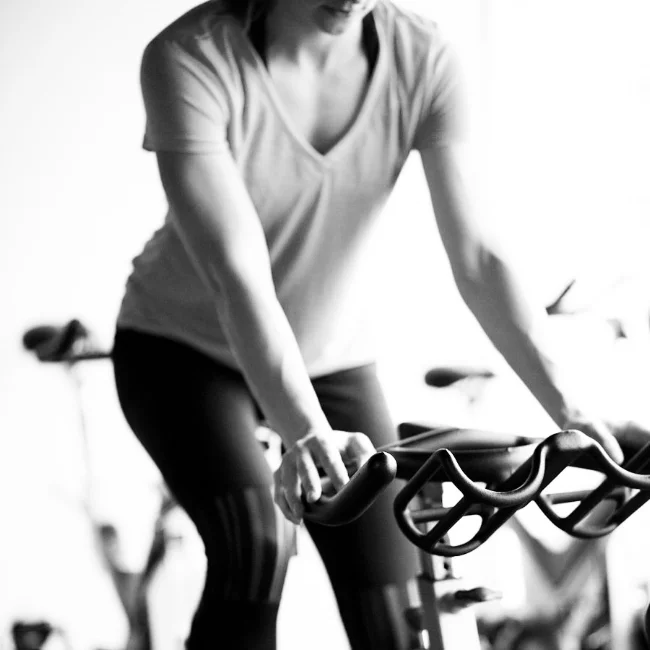
For moms, there's definitely the "it comes with being a mom" reasoning, which is sad, because women are apparently walking around assuming this is normal, likely going to great lengths to avoid embarrassing moments, or missing out on potential fun social and energizing activities. Even seemingly innocent exercise like spin class too soon after having a baby can be too much, because let me tell you, there is no way doing anything with quick feet out of the saddle post-baby is an option until  strengthening of the pelvic floor has happened. When I took a spin class at about 2 months postpartum I let the instructor know that I'd be sitting during some songs because of where I was at with my healing process post-baby, and she openly told me she completely peed herself her first class back teaching after becoming a mom.

What I want female athletes and moms (either pregnant or postpartum) to know is this: leaking is not a sign of normal pelvic floor functioning, and there is specific treatment to help no matter if it's  been an issue for you for one week or a decade.

The best kept secret around that particularly every athlete and mom needs in their life is the pelvic health physiotherapist.

If you're wondering a) what & where your pelvic floor is and b) "there's physio for that?" - then stick around, you're in the right place. I'll dive into "what & where" your pelvic floor is another day, but for today, know that there are experts who can help if you are experiencing any of the following symptoms from the list below, taken directly from the Lakeview Physiotherapy website. And fellas, this isn't just for the ladies! Men can experience any of these symptoms as well, aside from prenatal and postpartum of course:

  • "Urinary problems such as incontinence (leaking), frequent peeing, urgency
  • Bowel problems such as incontinence (leaking) and constipation
  • Pelvic pain - inside and outside the pelvis
  • Painful or difficult intercourse
  • Prenatal and Postpartum
  • Before and after pelvic surgery."

If there is one thing I have changed in my life over the past few years, that's gotten me much more satisfactory results across the board, it's this: Go to the experts for whatever it is you are seeking.

Want a cupcake? Go to the bakery that sells cupcakes and maybe one or two other products - their cupcakes will far surpass a grocery store that caters to all food needs.

Have any sort of issues going on in and around your pelvis? Go to the pelvic health physio - this is their area of expertise! When asked about when woman should seek help, Heather's response was:

"When a woman should see a Pelvic Health Physiotherapist really depends on the client. If a woman feels that Pelvic Health Physio could be helpful for her, the Physiotherapist can do an assessment and develop a treatment plan. If a woman is uncertain, particularly during pregnancy, she could ask her physician or midwife if Pelvic Physiotherapy would be appropriate at that time." - Heather Enns, Lakeview Physiotherapy and Acupuncture

If any of the above sounds like you, I encourage you to book in with a Pelvic Health Physiotherapist. Heads up there will likely be an internal exam, however a consent form must be signed first so you are definitely able to skip the internal exam if you aren't comfortable with this. But keep in mind the information you can receive from an internal exam will be very beneficial to your treatment. The internal exam is a small portion of the appointments I have, with the majority of the time being spent on any one of the following: looking at my alignment, testing imbalances in muscle strength from side to side, treating imbalances (massage/release/dry needling), and working on breathing.

My goals are simple:

  • To provide resources to athletes of all levels, so we can wear grey pants again on workout days.

  • To make sneezing & coughing comfortable again for the female (and male) population.

  • To educate pregnant and postpartum moms on their bodies, the changes they will go through, and how to minimize damage done to allow for faster and better recovery.

  • To spread this info around like wildfire, so that women (and men) can get back to the things they love without pain, discomfort, or embarrassment.

11-14-17 Edit: I am so excited to announce this article was picked up by Impact Magazine, and am incredibly grateful that it has been featured in the November/December 2017 edition. To check out the digital version click here.

That feeling when "trusting the process" delivers your reward

You know when you make a decision and at the time it really sucks because it means giving up something you really want right that moment (instant gratification) in exchange for something way down the road, and even though you know the trade off will greatly trump all those little "need right now" moments it's still so hard to trust the process at the time? And every time you have to pass on that want, over and over, you question, "is it worth it?".

But then the day comes where your patience and months (perhaps years) of tough decision making rewards you. This applies to so many things in life. Today I got one of those long-awaited rewards after months of having to trust the process.

I am so excited that 8 months of trusting the process has led me to this moment. Eight months ago I knew I needed to change my mindset on workouts, based on my knowledge of pelvic floor health and diastasis recti. I was doing Crossfit 5x/week, and am, as my husband describes me "insanely competitive". The competitive streak is directed against myself - I'm not trying to beat anyone else in the gym, just myself, always wanting to learn new skills or improve my previous weights or sets. While the gym is a great place to unleash this, it is not a good combo when pregnant and long term health and fitness well into my senior years is the goal.

So I held back. I changed gyms. My pregnancy workouts felt more like my old warm ups did, but I trusted the process. Mentally it sucked a lot of days, trying to match logical brain to emotion-driven brain.

I cried numerous times. I felt like I'd lost a piece of my identity. I've identified as an athlete for years, and as a trainer since changing careers a few years ago. And now I hadn't run in months. Hadn't touched a barbell in as many. My workouts involved lots of seated isolated muscle exercises. I missed my old coaches, and the noon crew that pushed me (and heckled me) and provided me a space to mentally reset each day as well as provided a physical outlet.

I had melt downs when I wondered if I'd ever be able to do what I could pre-pregnancy again. But again, I committed to trusting the process. Some days I hated the process. I had to remind myself:  isn't being able to do 70% of what I could pre-pregnancy for the rest of my life way better than being able to do 100% of what I could pre-pregnancy but only for 2-5 years because of the damage and beating I'd do to myself by pushing for that extra 30%, just to "prove that I could"?

The smile on my face today is after a visit to my pelvic floor physio, where I received that long term reward of being smart these past 8 months instead of just going for it because I could day after day at the gym. I don't have any pelvic organ prolapse and my ab separation is in a good place for only 6 weeks postpartum and the tone feels like it should at this point. This might sound tiny to you, but the alternatives I hear way too many women talking about post partum because they just didn't know how to care for their pregnant and/or postpartum bodies makes me incredibly happy to be where I am right now.

This is just the first of a mini-series of blogs I'll be releasing, so be sure to check back if any of the below apply to you:

  • You like nerding out about body stuff.
  • You're an athlete who "leaks" (regardless of if you've had kids or not) - this was me in University when doing large amounts of bounding and plyometric workouts as a middle-distance sprinter. I just didn't know better.
  • You're currently pregnant.
  • You plan on being pregnant at any point in your life.
  • You've had kids.
  • You have someone in your life who fits the above and you want to help educate them about how to better care for their body.

Stay tuned:) 

The hardest 4-letter word to say: Help

We are really good at bullshitting. Like, really good. “How’s things?” “Oh fine!! Fine, fine, fine. You??” Acquaintances will take your response at face value. Close friends might question how genuine you’re being by your voice tone, picking up on subtle cues between the truth and a fib. But even those closest to us, cannot read our minds. Social media posts make it even easier to paint a shiny coating over what an actual reality show of our life would look like.

Scenario one: I tend to over book myself, thinking it’s no big deal to grocery shop, clean the house, walk the dog, answer some work emails, get a workout in, make dessert and a salad, and still have time to shower and pull myself together on a Saturday before heading to a friend’s for a BBQ. Time to departure: 45 minutes. I have yet to shower. Baking just came out of the oven. Salad yet to be made. Instead of freaking out about being behind and starting to make all sorts of stories in my head as to how “it wasn’t my fault I have so much to do”, I asked my husband to help while I hopped in the shower. And guess what? He did. And guess what? We were only 10 minutes late instead of half an hour. There’s no way he could know I needed help until I said something. This is a small example, but relevant none the less.

“Vulnerability sounds like truth and feels like courage. Truth and courage aren't always comfortable, but they're never weakness.” - Brené Brown, Daring Greatly

Asking for help is damn hard sometimes. Asking for help to make a salad? Not such a big deal. But enter scenario two: In the fall I had a minor surgery done and I was not allowed to lift anything over 10lbs for 3 weeks. The stubborn side of me said, "surely that doesn’t apply to me, I can deadlift 1.5x my body weight!" Yup, sure, you’re exempt [enter eye roll]. The day of the surgery and the following week I could feel slight pain every time I moved my core (which, is like, 100% of the time you move). I had to ask my husband for a lot of help, which felt comfortable because of the closeness of our relationship. However, the first time I had to ask a stranger for help it was an incredibly humbling moment to say the least. I usually proudly farmer carry my groceries out of the grocery store, politely declining help from the cashier at the grocery store when they offer carry out. When I had to say, “yes please” the first time I went grocery shopping after the surgery I almost broke into tears right there. How could it be that I couldn’t lift my own groceries??? I’m stronger than this. I’m capable. I don’t need help. I can do this on my own…The good news is, asking for help gets easier the more you practice it. My next stop after groceries was the pet food store, where I would normally grab a 20lb bag of dog food, sling it over my hip and be on my way. This time asking for help to get a bag and take it to my car for me felt a wee bit easier. Easier, but still not easy. You know what the funny thing was? No one once rolled their eyes at me, gave me a weird look, or said anything condescending when I asked for help, contrary to what that silly voice in my head told me might happen. People are genuinely good, I believe that. And when you ask for help, people will respond with kindness. And if they don’t, find new friends and a new grocery store.

"When you don't ask for help when you need it, you assume all of a burden that might easily (and gladly) be shared. But you also deprive those who'd love to assist you of the opportunity to do so. Everyone is worse off." - Margie Warrell, Asking for Help Reveals Strength, Not Weakness

The old saying, “ask, and you shall receive,” really rings true. If there is something you’re struggling with – ask for help. This applies to everything! My husband listened to a podcast the other day about the specificity required for training for competition versus just exercising for pleasure, and one of the quotes that came out of it was, “if you’re your own coach, your coach is an idiot.” Now, don’t get me wrong, we are all responsible for our own happiness and motivating ourselves and keeping things going. But, I love this quote because we cannot overcome our weaknesses without some outside help. I don’t program my own workouts, because I would end up only programming my strengths, the stuff I love to do. I would avoid all the areas I’m weak at, because that shit’s hard and uncomfortable. The same with career, relationships, health, sports – our natural inclination is to veer towards where we’re comfortable and avoid the uncomfortable icky stuff. Enter your coach – in whatever form that may be – to help you address the weak spots, support you and let you know not being awesome at everything is not only a-okay, but is normal and human, and also to be there to celebrate with you when you move past the discomfort.

You don’t need to be the hero every time. You know what every Disney movie has? A hero. You know what every Disney move hero has? A kick ass team behind them supporting them, lifting them up, pushing them and coaching them along the way. You think Simba would have been able to come back and defeat Mufasa without the help of Rafiki and Pumba? Heck no. Simba would be drunk at the Jungle Bar lying passed out under a table in the corner at 4pm in the afternoon, smelling of week old laundry if it weren’t for his two supporters picking his ass up when he needed it.

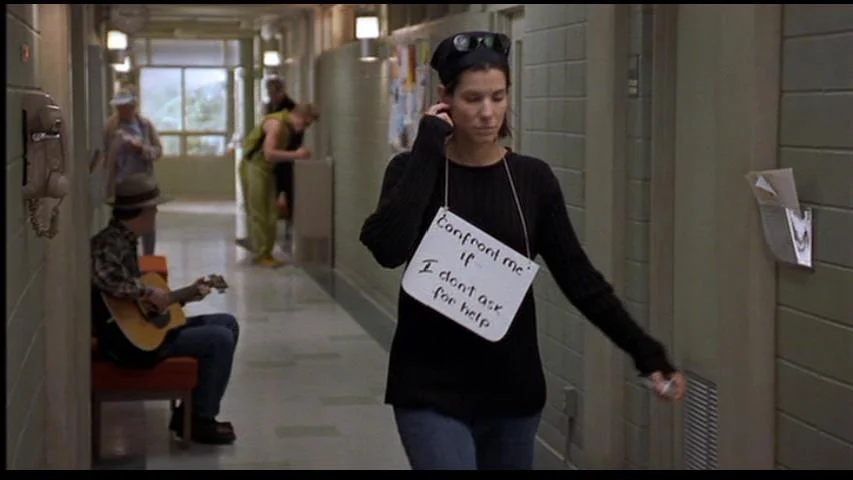
And if speaking aloud the request for help isn’t quite yet comfortable for you, you can always take a page out of Sandra Bullock’s character in 28 Days – just borrow her sign, “Confront me if I don’t ask for help.”


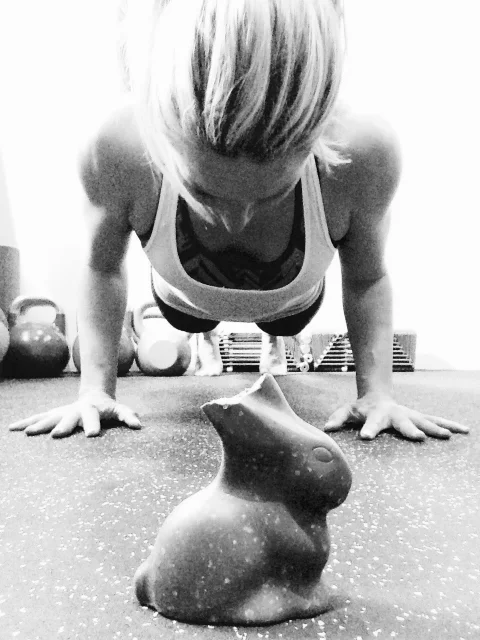
Burpees for Chocolate?

So, how many burpees DO you have to do to work off a chocolate bunny's ears? How about a bag of mini eggs?

The answer, is ZERO.

Here's why.


Exercise is not a punishment for something "bad" you did. Exercise is something you do for your body, because you actually like your body. Hopefully, because you love your body. You care enough about it to engage in activities that get your heart rate up for heart health, that challenge your muscles for strength, that engage your mind for improved cognitive function. Or get those endorphins going as you crush goals. Or to participate in a supportive community. Any of those reasons. But not for punishment.


Exercise is not to be interchangeable with sitting on a chair in the corner in time out, or being grounded, or getting your credit card cut up. It is not a punishment, it is a privilege, and a chance to better yourself from the inside out.

You work out because you know that even though it kinda sucks during the breathless sweaty part, you know it makes you feel oh-so-good afterwards. You know that by working out, you make better food choices to fuel those workouts, because you want to perform better. You work out because you want BALANCE - balance between eating for health and fuel, and eating for pleasure and socialization - and not feeling guilty or deprived when switching back and forth from one to the other. Of course, there is a limit to how much chocolate you can eat before yes, the negative effects take place. But a little chocolate is not going to kill you. Everything in moderation.

Changing your mindset will change your outcome. Replace guilt and punishment with compassion and self-love, and the impact will be greater than any diet or workout regime you've tried.


Final thoughts: This isn't jail. Working out is not punishment. So enjoy that chocolate, and then work out because you WANT to, not because you HAVE to.

Why I will not be putting down my gluten-filled bread anytime soon

A phrase that seems to be getting used around social gatherings lately is, "don't worry, there's no gluten in that," as they point to something I'm putting on my plate that I would never suspect had gluten in it in the first place, and frankly don't care if it does. Some how, being gluten-free has become the "it" healthy thing, and it is driving me a little bit crazy. I am here to defend my bread.

Let me first get two things out of the way:

1 - If you suffer from celiac disease or truly do have a gluten intolerance, this article is not aimed at you. I sympathize with your need to carefully watch what you eat lest you end up incredibly sick. I worked with a woman a few years ago who was celiac, and she could tell you that going gluten-free was not a trendy fit-in-her-jeans diet. Quite the opposite - she had to cut out gluten in order to be able to put on some pounds to get her to a healthy weight. She had no idea she was celiac and with University came a pretty typical University student diet of pizza and beer. She was constantly physically sick between throwing up and diarrhea, so much so that she could not keep any weight on. It got so severe that her doctor accused her of being anorexic, and suggested she seek out help. Eventually, testing proved she was not starving herself - she was Celiac. For celiac's, whenever gluten is consumed it triggers an immune response that damages the intestines and prevents absorption of vital nutrients.

2 - Let's define gluten. What it is NOT: gasoline, rat poison, tar, bleach, or any other toxic chemical. So why are we treating it like it is? What gluten IS: gluten is composed of two proteins (gliadin and glutenin for those who like to be ready for trivia quizzes), and is found not just in wheat - which includes durum, spelt, and kamut to name a few, but also in rye, barley, and triticale (a cross of rye and wheat). It is naturally occurring, and gluten is what helps food maintain its shape, and also gives it that chewy texture we love so much.

So with those two pieces out of the way, here are my top 5 reasons why I'll be keeping gluten on the table.

Reason #1: As someone who is not celiac nor do I have a gluten intolerance, cutting out gluten will do nothing for me.

Let me guess - some of you are already raising your hand saying, "but I went gluten free and I lost weight and I feel soooo much better." My questions to you are: What else did you cut out? How else did you change your eating habits? Did you actually cut out all sources of gluten, or just the ones you have on the naughty list, like bread or cereal? There are a few explanations as to why you likely lost weight, and that it wasn't actually the lack of gluten at all:

a) There was simply less food for you to eat when you adopted a gluten-free lifestyle. Particularly if you eat out a lot, your options are limited and so in turn you'll take in less calories overall every day simply because you skipped the bruschetta with bread, and the breaded deep-fried cheese sticks. It had nothing to do with the fact it was gluten you cut out, but the pure and simple math of a reduced intake of calories. Less calories, over time, means weight loss. [Sidenote: there is a balancing point where eventually too few calories per day will stunt weight loss and lead to fat retention - another blog topic for another day]. There are much better ways to learn portion control than going gluten-free.

b) You cut out a lot of crap (yes, that's the technical term) and replaced it with whole foods. If you went on a gluten free binge, you probably found per my point above that there were now less options for you - look at a Starbucks display - what can you eat instead of sugary croissants or high-fat filled muffins? Probably the banana next to the till. "I felt better because I skipped gluten by having a banana instead of a muffin. IT MUST BE THE GLUTEN!" Orrrr…. it's that you're eating nutrient-rich foods instead of highly-processed sugar-drenched pre-packaged convenience foods.

To finish up this point - did you actually truly go gluten-free? You may be surprised how many things gluten is lurking in. A few spots you may not have suspected include: the soy sauce you dip your gluten-free sushi in, the malt vinegar you sprinkled on your gluten-free batter fish and chips, the salad dressing you poured on your kale and grilled chicken salad, the cup of tomato soup you started your meal with, or the food colouring giving your zero-calorie bottled beverage a nice tinted hue. So if you didn't cut all that out, and you felt better "cutting out gluten", my hunch is still that it was what ELSE you cut out along with the gluten. Let's move on.

Reason #2: Often the "gluten free" alternatives when it comes to pre-made food are WORSE for us than the same product with gluten.

Remember above when I said that gluten is what holds food together and gives it that chewy texture? We've taken the gluten out of all these foods we love, so now we need to add something back in to hold the ingredients together, give it a nice texture, and make it taste good. Enter added salt, sugar, and fat. Sounds like the right idea, eh? Let's take out a naturally occurring protein and plunk in some other highly processed and less healthy alternatives in order to keep this tasting good. AND, we've also upped the caloric value of all these gluten-free products compared to the equivalent product with gluten in. So, more calories, salt, fat, and sugar. Have I sold you yet?

Reason #3: Gluten-free products are more expensive.

There are times when more expensive = healthier and can be justified, but since I'm neither celiac nor am I looking to add extra calories, fat, sugar, and salt to my diet, I think I'll go with the cheaper option. That one was easy.

Reason #4: I workout and I need carbs for fuel and recovery.

This is a whole topic on its own, but if you exercise, you need carbs. And if I'm exercising to take care of my body, I also want to fuel it with the best sources I can - simple foods like whole-grain bread, homemade granola. And again, I am not gluten intolerant, so I'm going to keep it simple when it comes to making a pre or post workout snack or meal. Oh - and even if you don't exercise, you still need carbs. They help your brain function and stuff. Kinda important.

Reason #5: By cutting out gluten I could be ignoring nutritious foods.

Some of the products people are cutting out because of gluten are high-fibre. And many of us aren't going to the bathroom as regularly in a day as we should, so we really do need that fibre. Plus, there have been some studies that show gluten actually has beneficial effects on blood pressure and healthy bacteria in our digestive system. Not only might I be missing out on fibre filled foods, instead I could be eating sugary replacements that I'm told through clever marketing are healthier for me based on the fact they are gluten free. Quinoa granola bars I've come across in the grocery store are nothing more than well marketed chocolate bars - honestly, you may as well just go for it and eat a KitKat. Those marketing tactics are cruel.

The end notes: Why do we keep going round and round with nutrition, getting wrapped up in trends of 3-day cleanses and gluten-free and cave-man and low-fat and all the rest? My guess is, is because they promise quick results with straight forward instructions and relatively little effort. Cut out bread and I'll lose weight? Awesome! I can do that. Just drink juice for 3 days and I'll lose 5 pounds? Perfect, count me in. The problem is, people are cutting carbs or gluten or fat, yet they're still eating donuts, pop, and McDonald's. It just doesn't make sense. Here's the truth friends (if we're still friends after this): there is no secret. Just wholesome foods, prepared by you as much as possible, in appropriate quantities, and everything in moderation.